

Welcome to the fourth and final part of this series on how power shapes writing.
In the previous parts, we explored how power operates disguised in culture, how it shapes the environments where writing circulates, and how technology increasingly structures the conditions under which ideas are produced and shared.
Taken together, these dynamics reveal something uncomfortable: writing is rarely as independent as we like to imagine. The structures surrounding it subtly influence what feels natural to say, how we say it, and even how we come to think.
In this final part, I want to shift the focus.
Instead of examining the structures that shape writing from the outside, I want to return to writing itself and ask what role it might still play if we learn to see those forces more clearly.
In other words, how might we use writing to create spaces where independent thinking and collective understanding can happen again?
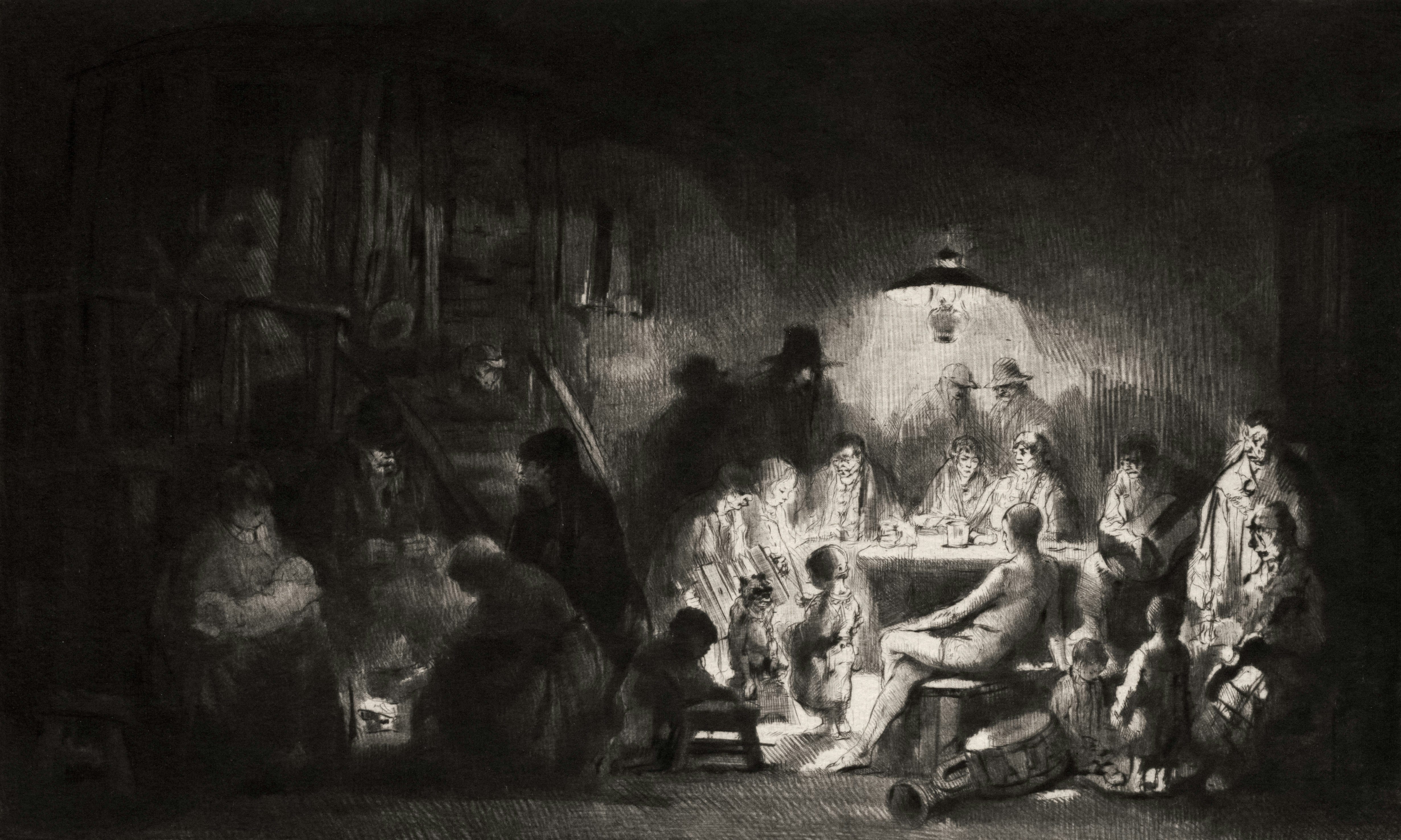
The Eidos of Writing
The long-term danger of allowing power to disguise itself within culture, operating through the systems and institutions that shape the reality we see and come to believe, is that it erodes one of the writer’s most essential capacities:
The ability to think independently while remaining open to thinking with others as ideas unfold.
Writing is more than just how ideas are communicated. It allows us to step outside the immediate flow of narratives, emotions, and interpretations circulating in society and examine them from a distance.
It creates a space where the mind can ask:
What is actually happening here?
Why is this interpretation dominant?
What assumptions are shaping the conversation?
What we mostly see today, however, is writing that fits the mold. Writing that appears certain, tells you exactly how to think, and rarely creates space for the collective to think out loud.
As writers, we all have a goldmine of experiences to share.
Someone who spent years in the corporate world can shed light on the incentive structures that keep us blind to how power operates. Someone who worked with propaganda, as I did, can reveal the mechanisms used to shape public perception. Someone who has been involved in politics can expose the cracks within our institutions. A former teacher can show how the education system reproduces these dynamics. A journalist can describe the pressures that arise when reality challenges powerful interests.
The central question for me, then, is how we create the space for independent thinking to be shared?
I am not looking for a definitive answer. That would likely create a new orthodoxy of its own.
What I care about is making progress.
Progress that allows people who are considering this path to speak honestly about their experiences. Progress that helps us imagine and debate new possible realities together.
Progress that gives writers their power back.
Even if it is still small, we can already see signs of this progress emerging. Writers like Jesse Welles use music to make us think about the political systems we live under. Writers like Trevor Noah use comedy to slow us down and reflect on the events unfolding around us. Writers like Rutger Bregman draw on history to challenge our assumptions and encourage us to use our talents to solve some of the world’s biggest problems.
The path ahead is uncertain. But like anything uncertain, clarity only emerges once we begin to move.
If writing has been shaped by the environments in which it circulates, then perhaps the place to begin is by returning to its foundations.
The step I am taking now is to revisit the fundamentals of writing and explore how they might function within the context we live and interact in today.
The Writing Mental Models
The term mental models became widely known in the business and self-improvement world largely because of Charlie Munger—Warren Buffett’s longtime business partner.
Munger popularized the idea of using “a latticework of mental models” drawn from multiple disciplines—physics, psychology, economics, biology—to make better decisions.
To explain his idea, he often used an analogy:
“To a man with a hammer, everything looks like a nail.”
In practical terms, if someone has only one framework for understanding problems, they will try to apply that framework to every situation, even when it doesn’t fit. An economist may see every problem as an incentive problem, while a technologist may believe every problem needs a technical solution.
One of the core mental models Munger advocated for was Psychological Tendencies — a set of recurring biases that subtly distort human judgment.
He believed that many failures in business, politics, and everyday life come not from lack of intelligence but from systematic distortions in how the mind interprets reality. One obvious example is social proof, the tendency to believe something is correct simply because many other people appear to believe it.
When I first encountered the idea of mental models, I was fascinated. I tried to learn and apply as many of them as I could. As I absorbed some of the principles that govern different disciplines, I gained better tools to navigate reality, and those tools gave me more power, particularly in my work.
What I did not realize at the time, at least not consciously, was that I was using those tools to reinforce the very reality they helped me navigate, rather than creating space for something new to emerge.
This is often how power operates. Around positions of influence forms a network of people who understand different mental models and apply them in specialized ways. One understands how cognitive biases shape human behavior. Another understands how social media platforms influence public discourse. Another understands how technology can accelerate profit and concentrate influence. Together, these capabilities can reinforce structures that sustain dominant interpretations of reality.
Writing, especially online where people spend most of their time reading nowadays, has, even if implicitly, its own mental models:
writing as capturing attention,
writing as content production,
writing as a system to refine through data,
writing as a way to signal identity,
writing as a tool to guide behavior,
writing as the delivery of confident answers.
None of these models has proven particularly helpful in cultivating independent thinkers or encouraging collective progress. I used them for years, and what I mostly saw was my writing being shaped to serve those who were already powerful.
So today I want to invite you to reconsider the mental models that guide how we write, and to help me think through a question:
What kinds of models might give writing some of its power back, allowing us to share our experiences more honestly, invite others into the process of thinking, and generate ideas together rather than simply deliver conclusions?
Think of what I’m about to propose not as finished answers, but as seeds. Ideas that still need to be tested, challenged, and developed through conversation.
Writing as Cognitive Metabolism
Writing begins long before the first sentence goes onto the page.
The mind, like the body, metabolizes what we let in. You will struggle to run or play sports if you smoke a pack a day and eat fast food consistently. The same is true for the brain. If you spend hours scrolling through social media, read only books that reinforce familiar mental models—or avoid reading altogether—and limit your conversations to superficial exchanges, developing independent insights becomes very difficult.
No wonder we see so much information online that’s fragmented, reactive, or just plain manipulative. That’s what most people consume. So that’s what they reproduce.
But when writers deliberately cultivate a different input environment — one that invites you to slow down and think, that offers careful observations of the world, that’s open for dialogue and evolution — their writing begins to draw from deeper currents.
In many ways, we’ve been trained to seek comfort in environments that feed junk input into our minds. A notification appears on the phone and it becomes easy to disappear into endless feeds, consuming things we can barely remember a few hours later. This is not accidental. You know the technology is designed to keep us hooked. The longer we stay, the more data is collected, sold to advertisers, and turned into profit. Our cognitive health is rarely part of the conversation when those systems are built.
As writers, we can either blame the current environments and continue indulging in the same behaviors, or rethink our routines and create the conditions for our attention to focus on better inputs.
I can’t speak for everyone. We all have different genes, upbringings, personalities, and countless other variables that make any one-size-fits-all solution a shortcut to failure. My wife, for example, can buy a box of chocolate and wait until the weekend to eat it. I don’t know how she does it. What I do know is that I can’t.
So what I need is to set the conditions in my favor.
Take social media. Simply deleting the apps from my phone gradually helped me stop browsing Instagram, Twitter, and Facebook (luckly, I never got into LinkedIn or TikTok.)
Another thing I’ve noticed is how little time we give ourselves to metabolize information.
We rarely slow down to check references, understand historical context, or think carefully about what we consume. The environment floods us with information and encourages us to keep moving faster just to stay afloat. But the moment we accept that we cannot keep up with everything, something changes. We begin to choose more deliberately what deserves our attention, and in doing so, we move away from superficial inputs and make space for more honest ideas.
This isn’t an easy mental model to adopt, and there is much more that could be explored to deepen it. But the small steps I’ve taken over the past year have already begun to change how I think and write.
Writing as Context Navigation
This one is less about how we consume different contexts as writers, and more about how we interpret and produce our work within them.
Writing circulates, is ranked (even if implicitly), interpreted through social cues, and always assigned a symbolic value.
Since it is virtually impossible to avoid contact with this dynamic, the best we can do is learn to navigate these contexts without allowing them to redefine the standards by which we write.
To do that, we need to be able to read different contexts without believing them blindly.
For instance, metrics, feedback, and recognition are not meaningless, but they are partial. If we take them as the only measure of success, we inevitably absorb the mental models that weaken the power of our writing.
One way to soften the influence of these environments is to gradually develop contexts of our own.
If we can create spaces where we communicate more freely with readers, where interactions are not dictated by algorithms and the work is not constantly graded by likes or shares, our attention can slowly shift from performance to independent thinking.
This newsletter is that kind of context for me, a counter-environment where our conversations are less contaminated by the pressures of speed, visibility, and the constant demand for certainty.
Sure, metrics like open rates still hover in the background as signals of performance. But here, at least, you are the one who ultimately judges my writing.
What we can’t forget, however, is that a writer can leave a more performance-driven context and still operate in the same way in the new one.
When I first shifted my focus to this newsletter, I carried with me many of the mental models I had learned in other contexts. I compared myself to other writers, checked my subscriber numbers daily, and wrote sentences that sounded more certain than they actually were.
It took time to unlearn these habits, and they still return from time to time to haunt me.
The lesson I slowly began to see was this: building a new context can remove some of the pressure, but it does not instantly bring liberation. If you still anticipate judgment before writing and feel anxious in the silence before pressing publish, nothing essential has changed.
In that case, the writer hasn’t escaped the system. They’ve internalized it and are now reproducing it elsewhere.
A new context, therefore, does not guarantee independent thinking. It only creates a space with less pressure, one where new habits of attention can gradually take root.
Writing as Perceptual Repair
If we seek progress instead of final answers, writing becomes less an act of expression and more a practice of learning to see differently.
Simply treating the present as strange and constructed can already shift our perspective. Instead of trying to “discover who we are”—a path that often steers us toward fitting within existing mental models—we start to recognize that our current ways of being are neither natural nor fixed. They are contingent, shaped by forces that can be questioned.
We may never reach perfection. Human nature is too complex for that. But if we keep returning to questions like “what kind of beings are we being made into right now?”, we start to notice the cracks in our interpretations of reality and open the possibility of imagining a different future.
Power and its structures will continue to operate by grouping people into fixed identities, compressing events into moral arcs, and rewarding clarity of stance over depth of inquiry. They will use every tool available—from filtering reality to directing our emotions—to keep us inside ready-made interpretations, nudging us toward shared certainty and away from collective questioning.
Writing as perceptual repair, therefore, becomes a way of resisting these forces. Not by declaring new certainties, but by slowing perception down long enough to examine the assumptions that subtly organize our thinking.
By putting language around what feels obvious or self-evident, writing makes those frames visible again and expose their contradictions — not only to the person writing, but to anyone willing to pause and look at them closely enough.
What once appeared natural begins to reveal itself as constructed. And once we can see that, the present stops looking inevitable, and the possibility of imagining something different begins to open.
I won’t deny the difficulties this mental model carries. The rewards are slower and more subtle. Sometimes I feel afraid of the consequences of being too honest on the page. And it requires a continuous effort to unlearn old habits.
But this is the mental model that made me fall in love with writing again. It has also been a key source of motivation throughout this first year of writing my newsletter.
Writing as Shared Inquiry
When someone writes honestly about a question they are trying to understand, readers encounter not only conclusions but the process of thinking itself.
That process becomes an invitation.
Instead of repeating interpretations handed down by institutions, algorithms, or dominant narratives, the writer exposes the path of their reasoning. In doing so, the writing invites others to question assumptions, extend the ideas, and reflect on them through their own experience.
In this way, writing transforms private reflection into a shared investigation of reality.
That is how knowledge has historically evolved. Scientific communities advance when researchers test, challenge, and refine each other’s ideas across generations. Philosophical traditions develop through centuries of dialogue, with thinkers responding to and reinterpreting the arguments of those who came before them. Literary circles grow when writers read each other’s work, exchange ideas, and push the boundaries of language together.
In each case, progress does not emerge from enforced agreement, but from many individuals examining the same questions from different angles.
When writing becomes persuasion or identity signaling, this process begins to break down. Writing stops being a shared investigation of reality and becomes a defense of positions.
In reflecting on this, I’ve also noticed that analytical language can sometimes close the space for collective participation. It clarifies and organizes thought, but it can also remove the uncertainty that invites readers into the conversation. And that uncertainty signals something important: thinking is still happening here. Let’s think this through together.
I’m often guilty of this, and it’s something I’ve been paying closer attention to lately. I care a lot about precision, and sometimes that pushes me toward clean statements that make the text feel too definitive.
But the more I think about it, the more I realize that you can name things carefully and choose accurate language while still inviting reflection.
For instance, instead of saying “social media manufactures identity,” I could write: “The more I observe how people defend ideas online, the more it seems that social media is not only shaping opinion but shaping identity itself.”
The second option gives readers space to compare their experiences with my own and engage in a dialogue that enriches our collective understanding of how social media shapes identity.
If you think about it, writing works much like any everyday relationship. If you position yourself as the authority who already knows all the answers, people are left with only two options: disagree and walk away, or agree and simply repeat what you said—not truly participate in the thinking.
That’s why I believe this mental model of writing as shared inquiry requires a different relationship between writer and reader. One where the writer observes, and the reader explores alongside.
Writing as Bottom-Up Approach
I left this for last because I have a hunch that many people who have experiences and knowledge they would love to write about are not doing so because they’ve internalized the top-down approach.
The top-down approach often appears neatly packaged in the idea of personal brands.
Before you even write your first sentence, there is already a long list of things you’re expected to figure out:
What’s your niche?
Where does your audience hang out?
How are you going to grow your audience?
What topics are you going to cover?
What’s your tone of voice?
And many other questions that are nearly impossible to answer when you’re starting out, while also narrowing the field of possibilities from the very beginning.
Without giving yourself the time to explore where your writing might lead, you naturally start looking for answers elsewhere. And there is no shortage of people ready to offer them on a silver platter.
I’ve followed these answers myself many times before. I got millions os views on Quora, then quit. Built a 25,000 following on Twitter, then quit. Built a newsletter with 3,000 subscribers, then quit.
Each time, those answers helped me find a direction that eventually made me miserable, often right when the first signs of success began to appear.
Every single time, I found myself inside a box I didn’t want to be in.
That’s why this time, with this project, I went for the bottom-up approach.
I didn’t know exactly who I was writing for, what topics I would cover, what form the essays would take, or how I would eventually monetize the project.
It was scary. It still is. But opening the page and letting curiosity guide the next step felt freeing.
Week by week, I began to notice which ideas I wanted to explore further and which ones I didn’t care about as much. Readers started connecting and sharing their thoughts with me. Slowly, certain pieces of the puzzle began to fall into place.
Lately, I’ve been experimenting with different formats, giving my ideas the chance to take shape in different ways.
This path is, of course, full of uncertainty. But in a way, it feels more natural than trying to control its direction by staring at metrics in a dashboard every single morning.
The Path Forward
After examining how power shapes writing, one realization becomes difficult to ignore.
Writing itself was never the problem.
The problem was the power structures that induced writing to operate in a specific way. Structures that reward certainty over inquiry, performance over exploration, speed over understanding.
Over the years, those structures have reshaped not only what gets written, but how writers think.
The writer who once explored questions slowly becomes a producer of conclusions. The reader who once encountered ideas becomes a consumer of positions.
Writing begins to serve power not necessarily through censorship, but through something more subtle: the narrowing of what feels possible to say, how long one can think about it, and what kinds of thoughts can survive in public.
If writing is to recover its power, the task is not simply to produce better arguments or sharper analysis.
It’s to reopen spaces where thinking can happen in public again.
Spaces where uncertainty is not punished. Where ideas are not forced to immediately perform. Where writers are allowed to think in front of others without pretending they already possess the answers.
This series, in fact, is not an attempt to offer definitive solutions to that problem.
At best, it is an attempt to make certain forces visible so that we can examine them together.
The five mental models explored here are only a starting point. They are incomplete, provisional, and certainly missing important dimensions.
But if writing is ever to serve the collective again rather than simply reinforce existing structures of power, the work cannot belong to one person alone.
It must remain a shared investigation.
So I want to end this series by asking you:
What experiences have you had that might enrich the understanding of these mental models?
What feels missing in them? Which blind spots do you notice?
What other mental models should we be examining if we truly want to understand how power shapes writing?
And perhaps the most important question:
Are mental models even the right place to begin this investigation?
Because throughout history, writing has been one of the few tools ordinary people have had to examine power.
Whether it can continue to play that role may depend on something much simpler than any model or framework.
It may simply depend on our willingness to use writing to understand the world and imagine new possibilities together.
I publish essays publicly here on Substack, but I don’t use Substack to send emails.
If you want future essays — plus two additional formats I only share privately — delivered to your inbox, you can join my private email list:
"It’s to reopen spaces where thinking can happen in public again."
Interesting... need to reflect on your Qs. Thank you.