

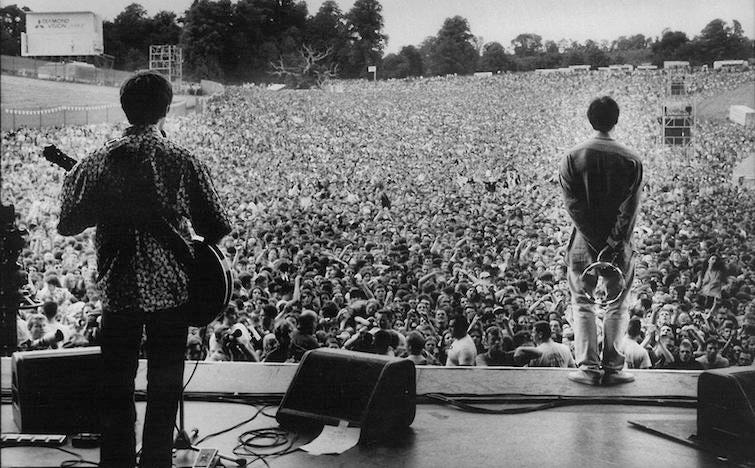
One hundred and twenty-five thousand people are waiting.
A helicopter breaks the horizon.
The sound of its blades is swallowed by the roar of the crowd.
The Gallagher brothers are arriving at Knebworth.
It’s easy to treat that concert as mythology now, but what makes it truly remarkable is how quickly it came together.
Just two and a half years earlier, they were five lads from council estates in Manchester, scraping their way through the local scene, playing to rooms half-empty. And now, here they were, stepping onto the same grass where Led Zeppelin delivered one of their last legendary shows, where Freddie Mercury bid farewell with Queen, where Pink Floyd, Paul McCartney, and Eric Clapton etched their names into rock history.
Knebworth ’96 became a generational marker—not just for music, but for a feeling that something was shifting. That for a brief moment, working-class defiance could fill a field. That someone from your street could stand on that stage. It was messy and loud and undeniably alive.
I was far from England. Ten years old, living in Brazil. I couldn’t have pointed to Knebworth on a map. But somehow, the echo of that night traveled across oceans and reached my bedroom.
I didn’t speak much English, but when I saw that black-and-white clip of Wonderwall on MTV, I didn’t need translation. The swagger, the attitude, the electricity—it said something, even if I didn’t yet have the words.
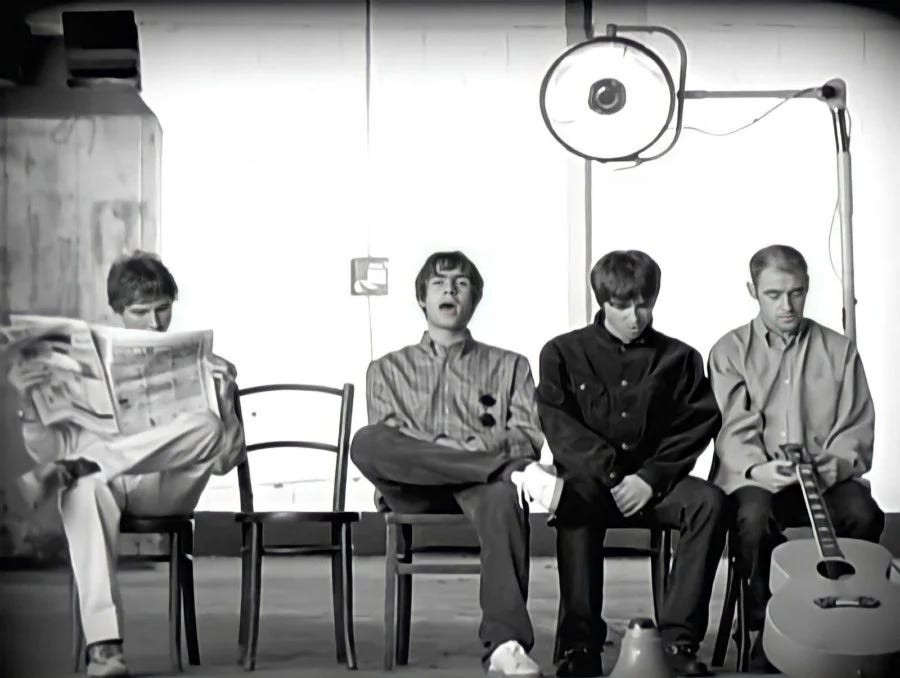
People often describe childhood as a time of innocence, but for many of us, it was also a time of internal turmoil. Long hours spent alone, trying to make sense of the world in private. While my mother worked 12-hour shifts, I stayed home with headphones on, searching for something to hold onto—something that didn’t feel like waiting. On those endless afternoons, bands like Oasis made the silence feel less empty.
And maybe that’s what Knebworth really meant. Thousands of people stepping out of their rooms, from all corners of the world—to remember what it’s like to belong to something larger than yourself.
A week ago, I stood in Wembley among 80,000 people, and for a moment, I caught a glimpse of 1996. The same pulse. The same noise. The same unspoken connection that turns strangers into a crowd. Almost three decades later, the stage had changed—but something in the air hadn’t. They were back. And somehow, so was I.
Definitely maybe
In 1991, Noel had just returned from touring internationally as a roadie for Inspiral Carpets. He walks into Manchester’s Boardwalk club and watches Liam fronting his band, The Rain.
The songs didn’t leave a mark, but Liam did. There was a swagger there—unpolished, but magnetic.
He decided to join the band under the condition that he would write the songs and take creative control. They agreed. The Rain became Oasis, and what followed was a year and a half of long drives, cold rehearsal rooms, and half-empty venues. Their songs hadn’t yet crystallized into anthems, but something was forming. A sound that, even in its early versions, felt like it was pushing against the walls of the rooms they were playing in.
The turning point came in early 1993 when Noel brought in a new song—Live Forever.
It didn’t sound like the others. It had more ambition, more heart, more soul.
But even then, no one paid much attention.
Nobody was writing about us. Not even to say that we sucked. We were completely ignored. - Noel
Still, they kept going.
Then came the night in Glasgow.
Debbie Turner, from Sister Lovers, invited Oasis to come play at King Tut’s Wah Wah Hut. They weren’t on the bill and had no invitation from the venue. But they drove six hours from Manchester anyway. When they arrived, the bouncers refused to let them in. It took a blur of cursing, arguing, and Debbie vouching before they were finally let through. Four songs. That’s all they had.
It could’ve ended there. A short set in a small room.
But Alan McGee—founder of Creation Records—was in the crowd. He wasn’t there for them. He didn’t even know their name. But something about their sheer audacity pulled him in. After the show, he approached Noel and offered to sign them.
And that handshake changed everything.
In January 1994, Oasis traveled to Monnow Valley Studio in Wales to record their debut album, Definitely Maybe.
All the late nights, the long drives, the empty rooms—it had all led to this.
And they almost blew it.
I need to be myself
Oasis spent over two weeks recording their first album at Monnow Valley. But when McGee listened back to the mixes, something was missing. The sound was too neat—too polished. It lacked the edge he’d heard that night in Glasgow. It sounded like a band trying to get it right, not one trying to tear the walls down.
So he scrapped it.
All of it, except for Slide Away.
He knew that what made Oasis special couldn’t be engineered piece by piece. It had to come from the room. From the friction between five people playing too loud and refusing to hold anything back.
McGee gave them one last shot.
This time, they brought in the sound engineer Mark Coyle and mixer Owen Morris, and instead of recording the instruments separately, they got everyone together in one room.
That second attempt didn’t just fix the mix. It unleashed the sound of Definitely Maybe—the album that would put Oasis on the map.
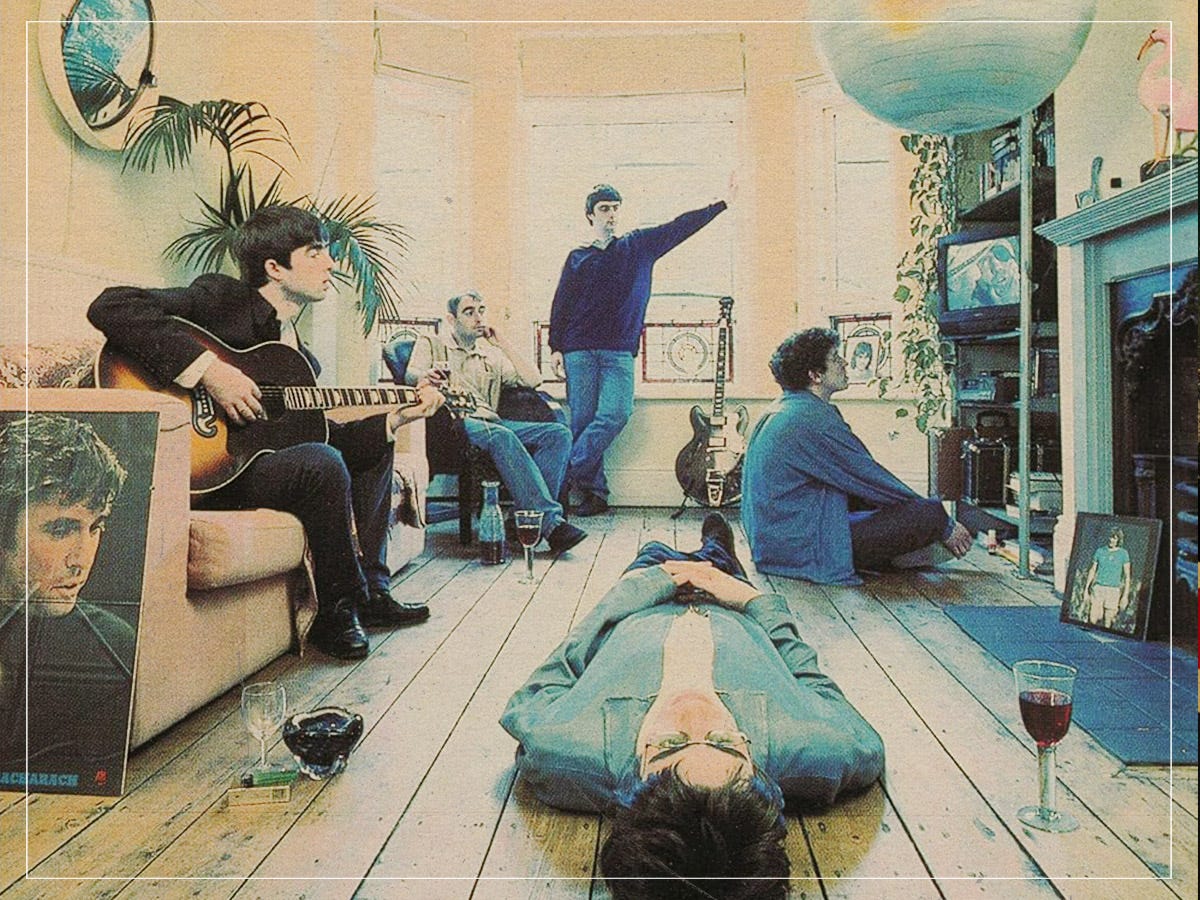
How rare it is to find someone in power who doesn’t try to smooth the edges, soften the message, or repackage something raw into something marketable. Someone who doesn’t just tolerate what makes you different—but believes that’s the point.
McGee wasn’t just a label head. He was a guitarist. A punk fan. Someone who had been on the other side of the glass. He understood that bands weren’t made in post-production. And he was trying to protect that—to guard the mess that made them real.
If Oasis had recorded their debut in the Spotify era, would they even be allowed to make an album?
Maybe someone would suggest toning down the working-class energy, the accent, the attitude. Make it more universal. More brandable.
And yet, I doubt anyone would’ve said: make it rougher. Be more raw.
Half the world away
Oasis lit up the world. And then burned through it.
By the late 2000s, the legacy was there—chart-topping albums, iconic performances, a generation raised on their songs. But so was the chaos. Broken hotel rooms. Concerts derailed by drugs or arguments that spilled onto the stage. For years, the volatility was part of the allure. Until it wasn’t.
In 2009, after yet another backstage fight, Noel walked away.
It’s with some sadness and great relief… I quit Oasis tonight. People will write and say what they like, but I simply could not go on working with Liam a day longer.
The news didn’t come as a shock—things had been unraveling for a while. But it still landed like the final chord of a song you weren’t ready to stop. For a generation that had grown up with Oasis, it felt like something had closed.
But the brothers moved on faster than the fans did. And before long, each had launched a new project of his own.
The interviews became their battleground and their bridge—sometimes honest, sometimes playful, often bitter. It was how they “talked” to each other.
Years later, Liam appeared on The Jonathan Ross Show. By then, reunion rumors had become tabloid wallpaper. Ross brought up the rumored £100 million offer for a comeback tour. Liam confirmed the offer was real—but said Noel was the one who turned it down.
Ross pressed further, pointing out that for years, the public had painted Liam as the difficult one. But now, it seemed the roles had reversed. Was Noel the problem?
Liam didn’t miss a beat.
No, I am a problem. I think we’re both the problem. And the problem is that he thinks he’s not the problem. So he thinks I’m both the problems, whereas I’m just a problem. He needs to take on some of the problem, and when he does that, we’ll move on.
It was classic Liam, but different—sharper, more self-aware, still delivered in his own chaotic way, but disarmingly honest in a way few people dare to be.
Later, Noel sat in the same chair on the same show. He brushed off the £100 million claim, saying there wasn’t that much money left in the music business. But he added that if someone did offer it to him, he’d take it in a heartbeat.
Then he turned the question around:
I find it a bit sad that there’s a whole generation of kids, working class kids, who have got nothing of their own to buy into… Where’s the new Oasis?
It sounded like the door was closed. Like he was more interested in what was next than in returning to the past.
And yet, sixteen years after the breakup, the brothers are back. Whether it was £100 million or not, they’ve agreed to tour again.
The cynic in me wants to say it’s all about money.
But then I wonder what it really feels like—to step back on that stage next to your brother, after everything, and hear 80,000 voices shouting back the lyrics you wrote in your twenties. Words that somehow became part of their lives too.
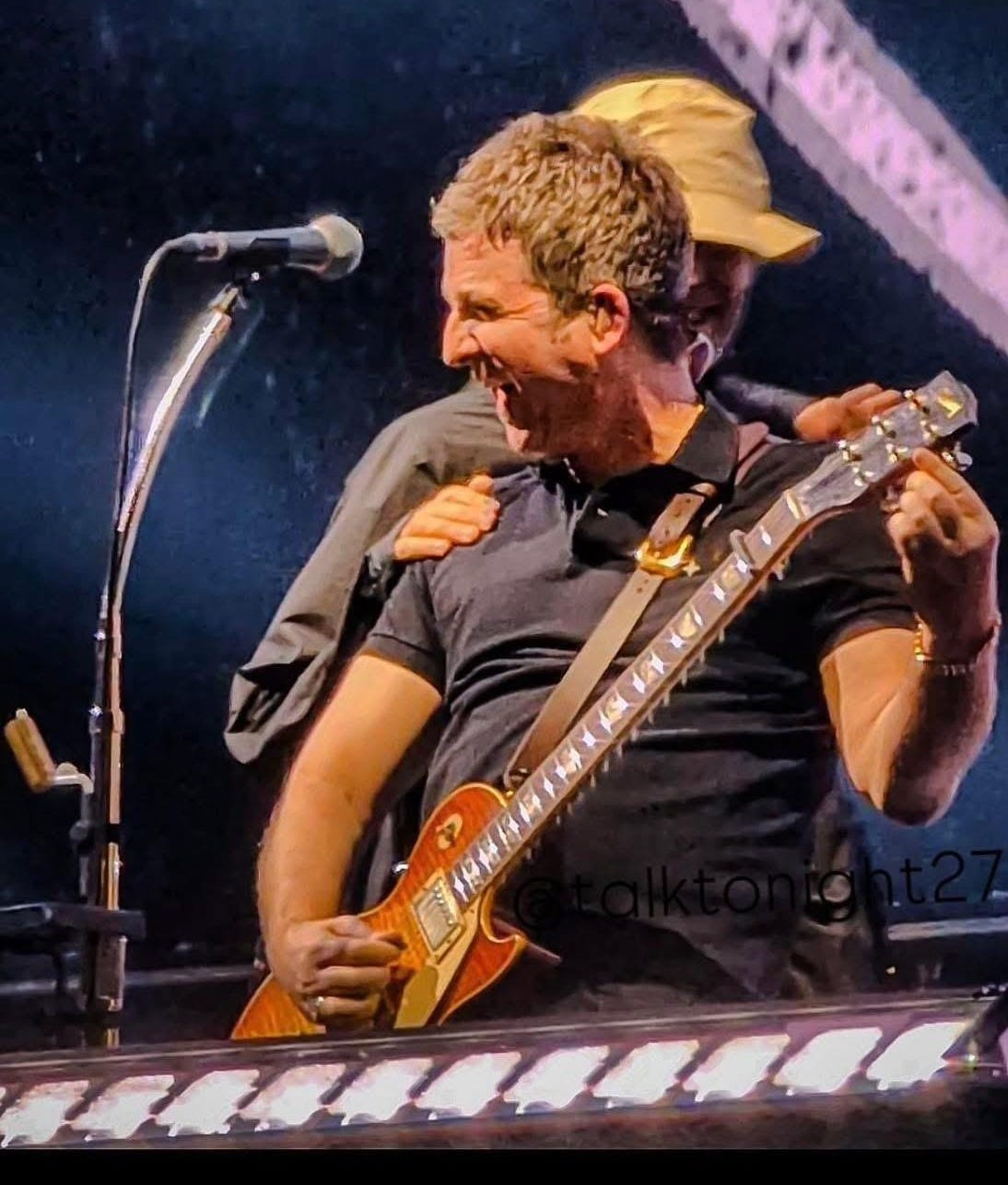
D’you know what I mean?
All around the world
Noel and Liam signed a global tour—starting in the UK, then stretching across North America, South America, Australia, and Asia.
When the London dates were announced, I didn’t think twice. I grabbed a ticket for Wembley.
And on July 30th, as I walked through Camden with my wife and an old friend, the city stirred something in me.
I thought about my first time arriving in London, years ago—fresh from Brazil, trying to find my footing in a place that felt, at once, chaotic and full of possibility. A city where everything collided—languages, beliefs, stories, accents—and somehow, it all held together.
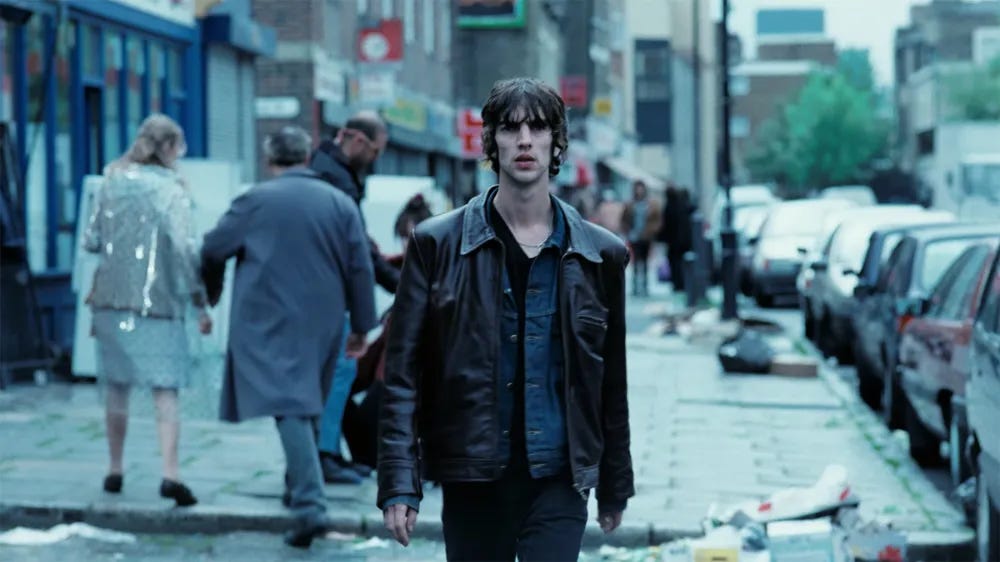
I thought about the first time I saw Richard Ashcroft walking against the crowd in Bittersweet Symphony. London as backdrop.
I thought about our little flat in Camden. My wife and I chasing something uncertain, trying to make life work on little more than instinct. Me quoting Noel—“true perfection has to be imperfect”—as if it were my own line, and her laughing not because she believed me, but because she loved that I tried.
And then I thought about the concert. And I got nervous.
Big events carry that kind of weight. They come wrapped in memory, in expectation, in everything you hope they’ll deliver. But reality doesn’t always match it.
Would Liam still have the voice to hit the chorus of Some Might Say?
Would the chemistry still be there—or would it feel like two men playing roles they’ve long outgrown?
Would this be a true return, or just nostalgia dressed up as something more?
I didn’t know. But I was there, ready to find out.
Hello, hello (it’s good to be back, good to be back)
The opening act wasn’t just a smart choice. Richard Ashcroft wasn’t there to warm up the crowd. He was part of the story. A longtime friend of the Gallaghers, especially Noel, who once wrote Cast No Shadow as a tribute to him.
As Ashcroft moved through his set, you could feel the anticipation building. The crowd swayed through the early tracks, but everything shifted when he reached Bittersweet Symphony. Arms in the air, voices rising together. No phones. No distractions. Just the sound of 80,000 people remembering what it feels like to be fully present.
Then Oasis walked on.
And the stadium erupted.
Everyone was on their feet—and from what I could tell, they never sat back down. I kept glancing at the seated sections throughout the show, almost curious to see if anyone would break the spell. But song after song, the energy didn’t dip. Not once.
Liam was in full command, as always. Still the frontman. Still holding his hands behind his back with that same confidence from 30 years ago. But he also gave Noel his space. And his older brother led five of the songs.
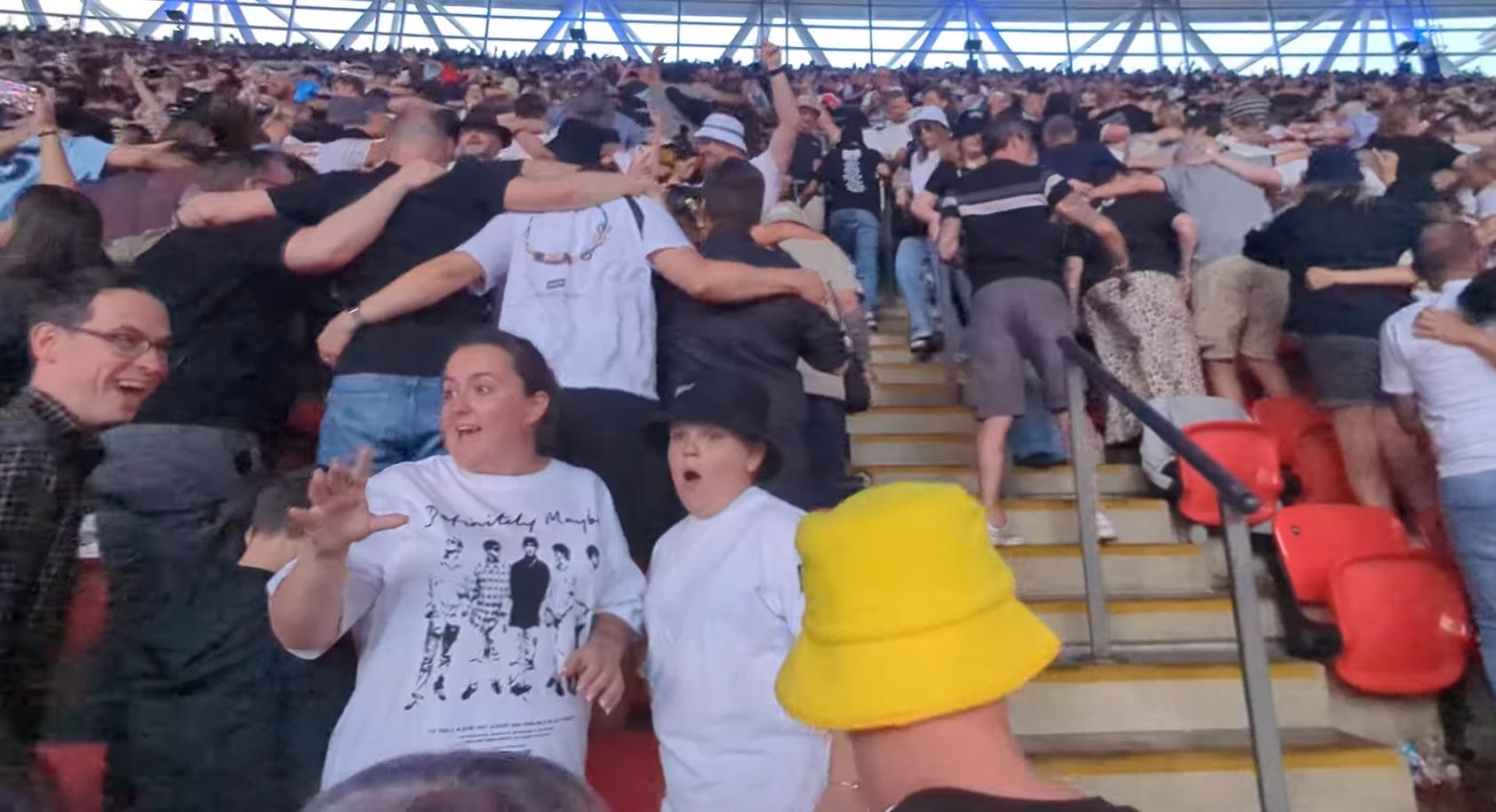
When they launched into Cigarettes and Alcohol, the crowd exploded.
Everyone jumping, shouting, letting go. And in the middle of it all—a kid who looked like he was seeing magic for the first time.
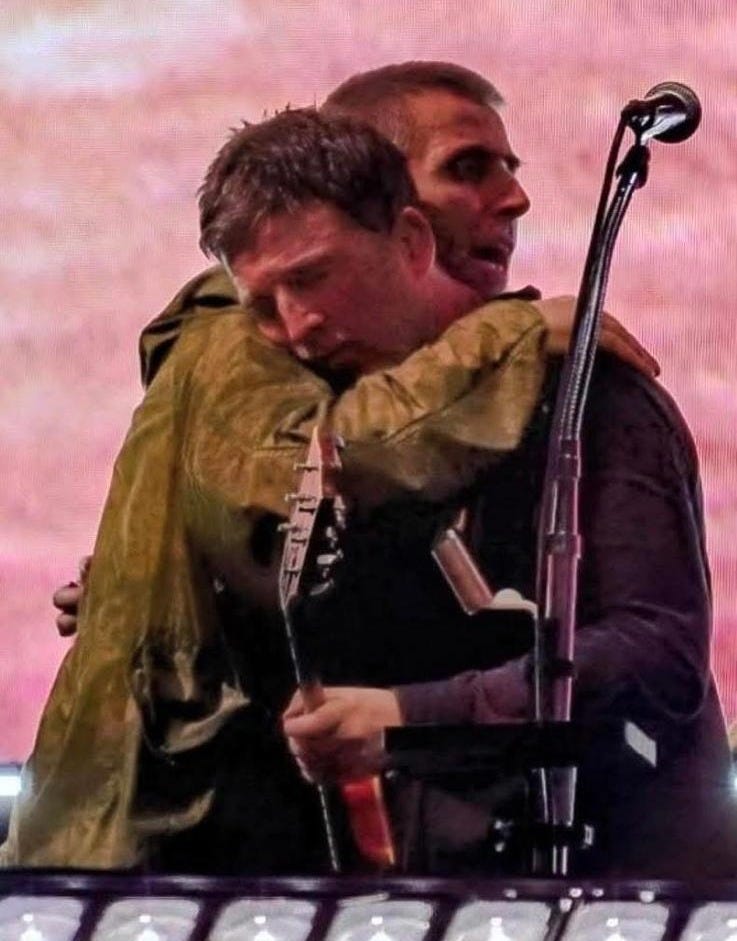
Halfway through the show, Liam dedicated Stand by Me to Noel.
A glimpse of their brotherhood. Easy to miss. But after all these years, after everything that had been said and unsaid between them, it gave even more meaning to that moment.
The hits kept coming. One after another. There was no time for a bathroom break. No time for another beer.
As the set drew to a close, my mind wandered back to the boy I once was—alone in a bedroom in Brazil, pressing play for the hundredth time. Now, decades later, I stood in a stadium full of strangers, singing the same words that once kept me company. And somehow, it felt like coming home.
I’m free to be whatever I
The morning after the show, I came down to the hotel breakfast room wearing my new Oasis t-shirt.
Two other Brazilians were there, both wearing theirs. We smiled, nodded, and started talking the way people do when they’ve just witnessed something rare. They shared their Oasis stories. I shared mine. We laughed about how lucky we were to have grabbed tickets. Just the kind of light connection that music makes possible.
Later that day, I made my way to Gatwick with my wife and my old friend. We were heading back to the Netherlands.
As we walked toward Terminal North, we passed a boy—maybe twelve years old. He caught a glimpse of my t-shirt and lit up.
“Oasis!” he shouted, half-whispered, like it had slipped out before he could catch it.
I smiled and threw him a quick rock-on gesture. He grinned and immediately began to sing:
“Tonight, I’m a rock ’n’ roll star.”
As we kept walking toward security, I couldn’t stop thinking about that kid’s face—singing like the song had always belonged to him.
And it reminded me of something Ozzy Osbourne once said:
I don’t want you to play me a riff that’s going to impress Joe Satriani; give me a riff that makes a kid want to go out and buy a guitar and learn to play.
Maybe that’s what it’s always been about.
Not the precision. Not the polish. But the spark. The spirit. That reminder that being yourself never needed anyone’s permission.
Perhaps that’s what still lives on—not just in those of us who grew up with these songs, but in a new generation discovering them for the first time.
And if that’s still happening—then yeah, maybe the kids will be alright.